For many interior designers, the choice between print design and woven textile design feels like a technical detail rather than a strategic decision. Yet after eighteen years in interior design and now working deeply in textile and surface pattern design, I’ve learned that this choice can dramatically shape the success, longevity, and beauty of a project.
Most designers have never been taught the difference. No one ever told me that you can adjust scale, customise colourways, or select a base cloth that perfectly suits a specific application. No one explained that custom woven textiles open an entirely different world of creative and performance possibilities. This article is designed to bridge that gap and help you make confident, informed decisions for your interiors.
Understanding Print Design
Print design involves applying artwork onto a base cloth. It’s incredibly versatile and often the best choice for:
Wallpaper
Home décor fabrics
Seasonal collections
Small‑batch or custom projects
Fast‑turnaround interior needs
But print design also comes with limitations, especially in the interiors market. You’re often restricted by:
The base cloths available for printing
Durability and performance requirements
Scale and repeat constraints
Colourfastness
Lead times and minimum quantities
The tactile qualities of the cloth
For upholstery, especially commercial-grade upholstery, only a handful of base cloths are strong enough to perform well. That means your creative freedom is shaped by what the base cloth can handle.
Understanding Woven Textile Design
Woven textiles are created at the mill, thread by thread. This opens an entirely different world of design possibilities:
Custom fabric widths
Choice of fibres such as linen, cotton, wool, polyester, or blends
The ability to create texture through fibre combinations
Rich monochromatic palettes using only a few coloured yarns
Designs ranging from simple weaves to intricate jacquards
Woven textiles are often the better choice for:
High‑use upholstery
Hospitality and commercial interiors
Projects needing long-term durability
Large-scale interior fitouts where minimum order quantities are easily met
The main limitation is quantity. Mills typically require minimum orders of around 50 yards, making woven textiles less accessible for small residential projects.
A Real Project: When the Medium Shapes the Outcome
I recently designed a pattern for a small-batch blanket manufacturer. The artwork was created specifically for the blanket’s finished woven size, designed to work with the structure and scale of the weave.
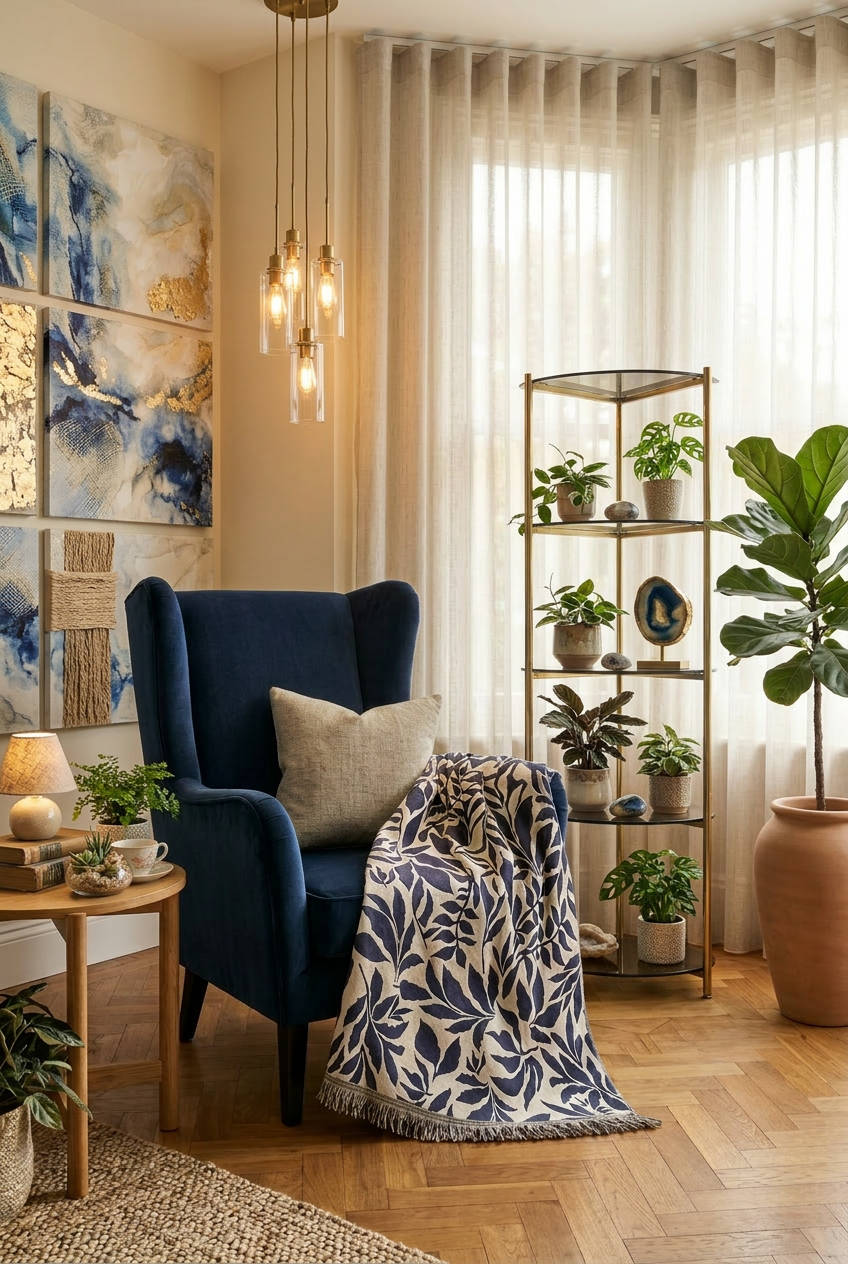
Blanket Mockup of Custom Design - Forest Floor in Indigo
A local interior designer later saw the pattern and wanted to use it in a completely different way. She needed:
A new colourway to suit her interior palette
A different scale
A fabric suitable for upholstering a baby feeding chair
Only seven metres
A two‑week turnaround
This instantly ruled out weaving. The mill’s minimum order was far too high, and the lead time too long.
We pivoted to print.
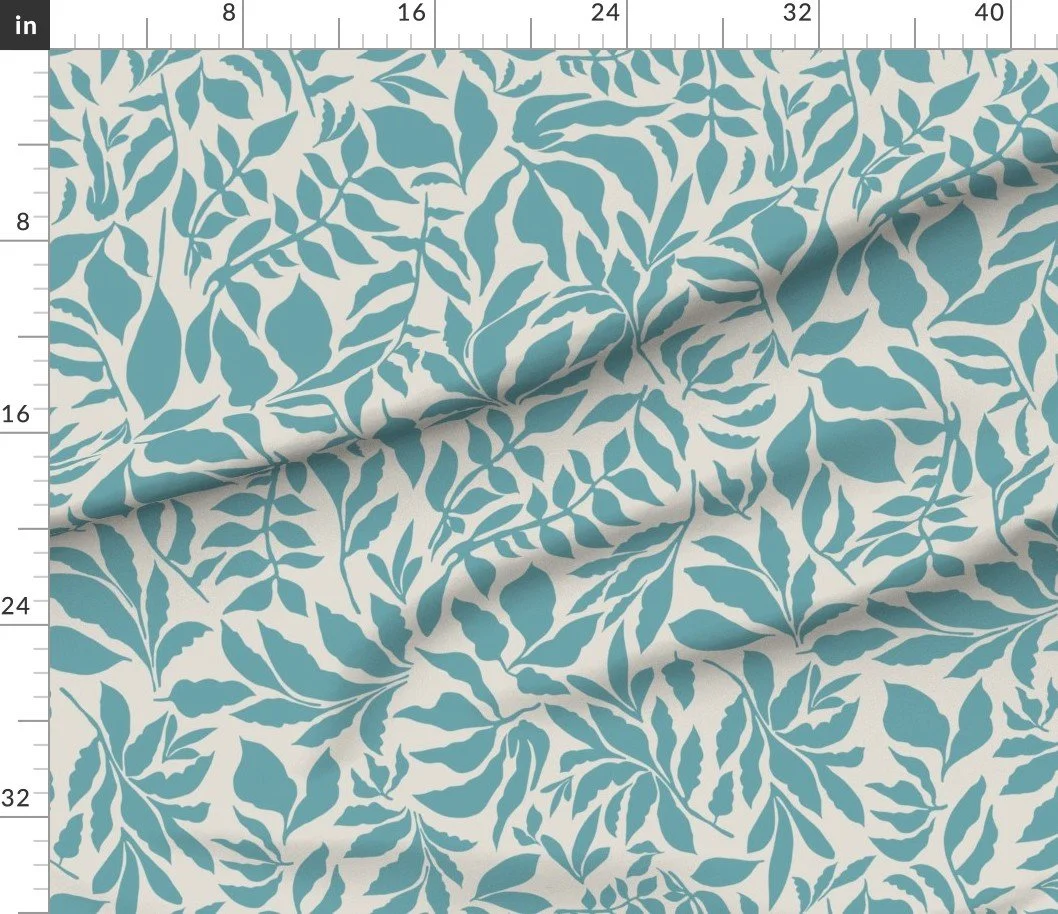
Custom printed fabric - Forest Floor in Teal and Oatmeal
We selected a polyester velvet base cloth because:
It’s soft and warm to the touch
It has high rub resistance for commercial use
It’s durable and easy to clean
It offers excellent lightfastness
It prints beautifully
The result was a custom fabric that met every requirement. This project perfectly illustrates how print design can be the ideal solution when timelines, quantities, and performance needs align.
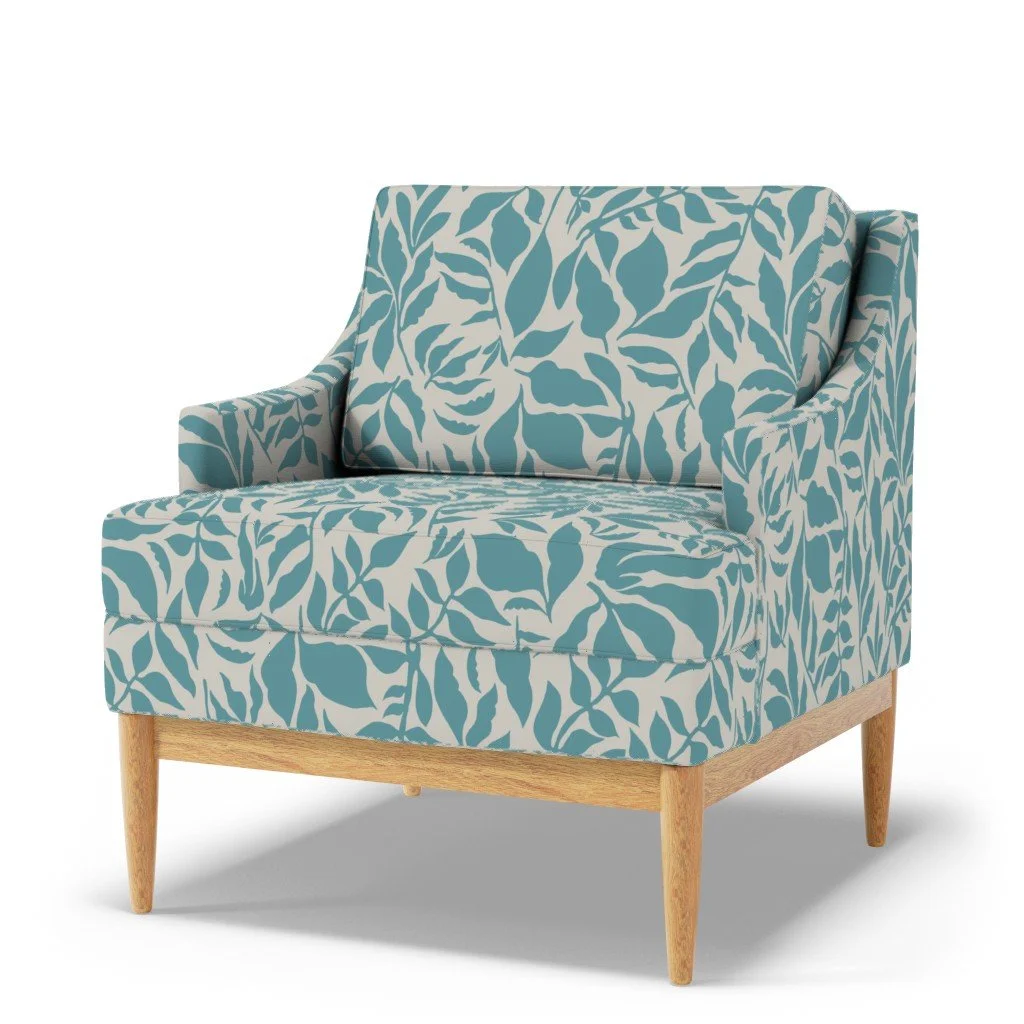
Chair Mockup with custom print design - Forest Floor in Teal and Oatmeal
How I Guide Clients Through the Decision
Choosing between print and woven isn’t just technical. It’s strategic, and it’s deeply tied to the realities of interior spaces.
Longevity
The application dictates the lifespan. Curtains, sofas, bedheads, and high‑use upholstery demand fabrics that will last years. Clients usually understand these are long-term investments and are more selective with their choices.
Sustainability
I strongly believe in reducing waste and avoiding unnecessary manufacturing. Print‑on‑demand is a powerful tool because you produce only what you need.
But sustainability also means choosing the right fabric for the right application. I’ve seen:
Linen curtains disintegrate after months of full sun exposure
Indoor upholstery fabrics fade and weaken on window seats
Natural fibres fail because they were chosen for aesthetics rather than suitability
Selecting the wrong fabric leads to early replacement, which is the opposite of sustainable.
Cost Over Time
A cheaper fabric that fails early becomes expensive. A well-chosen textile (print or woven) saves money in the long run.
Creative Freedom
Print design gives flexibility in colour, scale, and motif, but within the constraints of available base cloths.
Woven design offers almost unlimited creative freedom if your project meets the mill’s minimums. For large interior projects such as hotels, retirement villages, or office fitouts, woven textiles become a playground of possibilities.
The Future of Textile Design in Interiors
This is the part that excites me most.
For eighteen years as an interior designer, no one ever told me that custom textile design was possible. No one explained that you could adjust scale, customise colourways, or choose a base cloth that perfectly suits the application. Now I see myself as the bridge between interior design and textile creation — helping designers unlock possibilities they didn’t know existed.
What Excites Me
The rise of print‑on‑demand
The ability to create bespoke textiles for small projects
The creative freedom of woven design for large projects
The merging of technology and craftsmanship
What Concerns Me
It’s still a new idea. Many designers don’t yet trust the process. They need examples, case studies, and reassurance that custom textile design is reliable, achievable, and transformative.
How Designers Should Evolve
Be open to new technology
Learn the strengths and limitations of each textile medium
Understand how application guides fabric choice
Embrace customisation as a tool, not a risk
How I Use Both Mediums
I choose print or woven based entirely on:
The project brief
The performance requirements
The timeline
The quantity
The desired aesthetic
Both mediums are powerful — but only when used intentionally.
Which Do You Need?
If your project is small, fast, or highly customised, print design is likely the best fit.
If your project is large, long-term, and performance-driven, woven textile design opens doors you may not have explored yet.
The real magic happens when you understand both worlds and choose the one that supports your vision, your client’s needs, and the life of the interior you’re creating.