As a textile and surface pattern designer working with manufacturers, interior designers, and product developers across New Zealand and beyond, I’ve learned a major misconception in our industry is this:
paying for custom artwork does not automatically give you copyright ownership.
I’ve seen this misunderstanding crop up in early‑stage product development meetings, in emails from new clients, and even in conversations with seasoned professionals. So today, I’m breaking down what rights you actually get when you commission custom design work—and how to make sure your agreements are fair, clear, and commercially sound.
This post draws on my experience as a designer, studio owner, and collaborator with local and international manufacturers.
The Default Position: Who Owns the Copyright?
In most countries, including New Zealand, the creator is the first owner of copyright. That means when I paint a watercolour motif or develop a repeat pattern for a client, I own the copyright unless we sign a written agreement transferring it.
A few key points from the law:
Under the Berne Convention, copyright automatically belongs to the human creator.
In New Zealand, employees’ work belongs to the employer, but freelancers retain copyright unless assigned in writing.
The UK follows similar rules.
The US has a narrower “work made for hire” doctrine that only applies in specific circumstances.
If you’re commissioning custom designs from a freelance designer, you’re not buying copyright by default—you’re buying usage rights, and those rights must be spelled out clearly.

Photo by Tingey Injury Law Firm on Unsplash
Buyout vs Exclusive vs Non‑Exclusive Licensing
Over the years, I’ve negotiated all three types of agreements. Each one carries different implications for both the designer and the brand.
Buyout (Assignment)
A buyout is a full transfer of copyright. The buyer becomes the new owner, permanently.
From the document:
“Transfers to buyer permanently (must be in writing and signed).”
In practice, this means:
The designer can’t reuse or relicense the artwork.
The buyer can enforce copyright and sue for infringement.
Pricing is highest because the designer loses all future earning potential from that artwork.
I only recommend buyouts when a brand needs complete, long‑term control—usually for hero products or signature collections.
Exclusive License
An exclusive license gives the buyer sole rights within a defined scope, while the designer retains copyright.
From the document:
“Buyer gets sole right to use within defined scope.”
This is the most common structure in textile and wallpaper design. It allows:
Category exclusivity (e.g., wallpaper only)
Territory exclusivity (e.g., Australia & NZ)
Time‑bound exclusivity (e.g., 24 months)
It’s flexible, fair, and commercially sensible—especially when both parties want clarity without a full buyout.
Non‑Exclusive License
A non‑exclusive license allows the buyer to use the design, but the designer can license it to others.
From the document:
“Creator can license the same design to multiple brands, even in the same category.”
This is ideal for:
Smaller brands
Lower‑volume collections
Designers building passive income through repeat licensing
Pricing is lowest because usage is shared.
Photo by Louis Hansel on Unsplash
Territory, Product Category, and Term
These three elements determine the real value of a license. I often walk clients through them during our first call, because they shape everything—from pricing to production planning.
Territory
Where can the design be sold?
Worldwide
Regional (e.g., Australia & New Zealand)
Country‑specific
From the document:
“Best practice is to list countries explicitly rather than using vague terms like ‘Northern Europe.’”
Product Category
What products can carry the design?
Wallpaper
Upholstery
Apparel
Stationery
Home décor textiles
Narrow categories protect the designer’s ability to license elsewhere. Broad categories require higher fees.
Term
How long can the design be used?
12–36 months is typical
Perpetual licenses must be priced accordingly
From the document:
“Perpetual (in perpetuity) licenses are possible but should be priced accordingly.”
Pricing: Flat Fees, Royalties, and Hybrids
Industry benchmarks vary, but the document outlines typical ranges:
Flat Fees (Buyouts or One‑Off Purchases)
Apparel: USD $500–$750
Home décor: USD $500–$1,200
Quilting/fabric collections: USD $350–$750
Royalty Rates
Apparel fabric: 5–8%
Quilting: 5–10%
Home décor: 5–12%
Stationery/gift: 5–8%
Higher rates apply to exclusivity, established designers, or specialty markets.
Hybrid Deals
A modest upfront fee + ongoing royalties can balance risk for both parties. I often recommend this structure for new product lines where sales volume is uncertain.
Moral Rights: What Can’t Be Sold
Even when copyright is assigned, designers often retain moral rights—such as the right to be credited and the right to object to derogatory treatment of their work.
From the document:
“These rights are inalienable in some countries and can only be waived, not transferred.”
For brands, this means:
If you need full control over modifications or attribution, you may need a moral rights waiver.
For designers:
Waiving moral rights should always come with compensation.
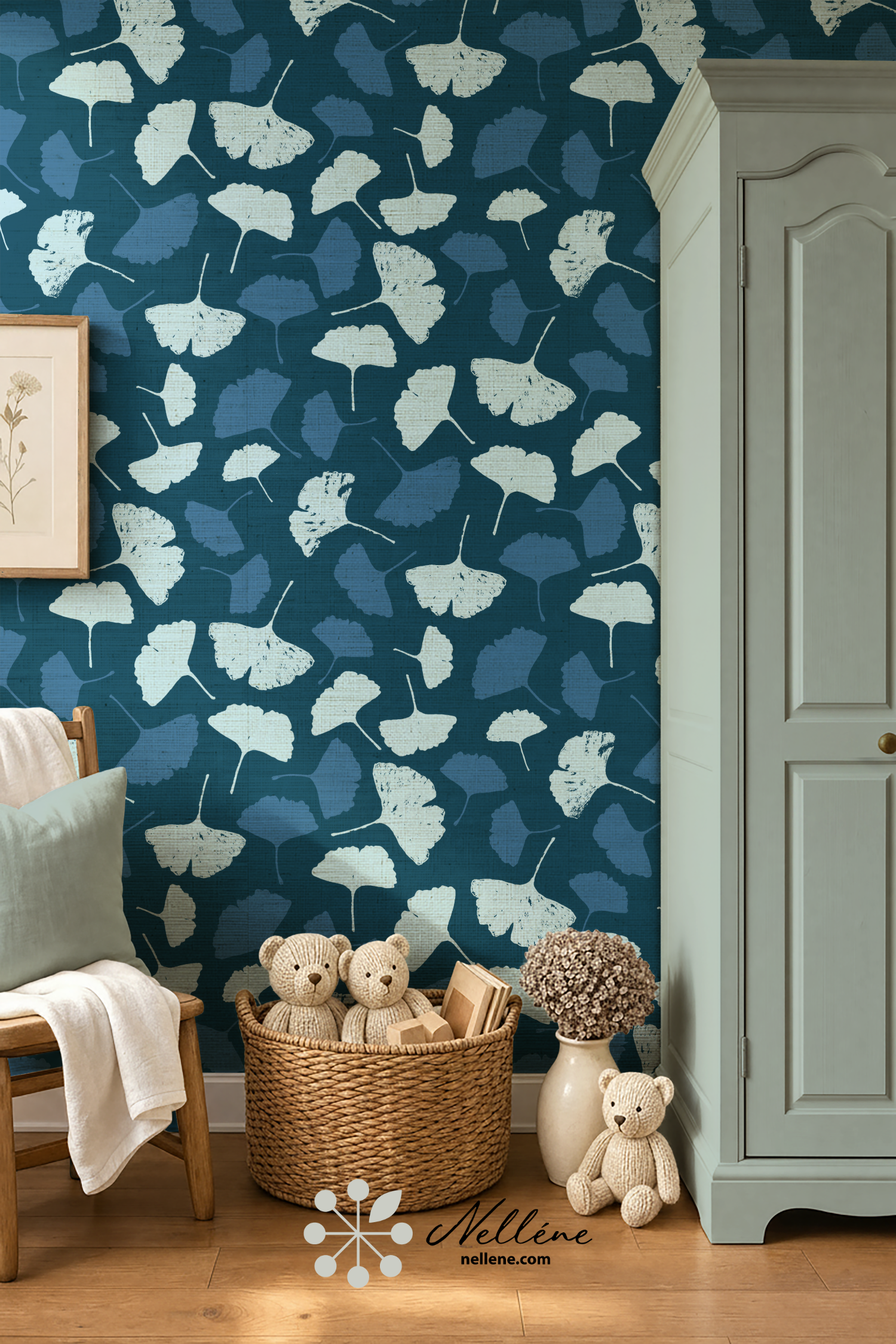
Gingko Indigo Wallpaper
Making Agreements Fair for Both Artist and Manufacturer
After years of working with local suppliers, interior designers, and product developers, I’ve found that the best agreements share a few qualities:
Clarity Over Ambiguity
Define:
Territory
Category
Term
Exclusivity
Sublicensing
From the document:
“Vague terms like ‘worldwide’ or ‘as agreed’ create disputes.”
Proportionate Remuneration
Match the fee to the rights granted. More rights = higher value.
Written Contracts
Even non‑exclusive licenses should be documented.
Respect for Moral Rights
Credit the artist where feasible, and compensate fairly if waivers are required.
Local Law Matters
If you’re operating in New Zealand, the Copyright Act 1994 governs ownership and assignments. For global distribution, specify governing law and enforcement.
Final Thoughts
Custom design work is one of the most joyful parts of my studio practice—collaborating with brands, developing motifs that become part of real homes and products, and watching ideas move from sketchbook to production. But the legal side matters just as much as the creative side.
Clear rights, fair compensation, and well‑defined agreements protect both the designer and the manufacturer. They create trust, reduce risk, and allow the creative process to flourish.
I created a checklist for both designers and manufacturers. Get a copy here
Disclaimer: This checklist is general information, not legal advice. Copyright, moral-rights and commissioning rules differ between countries. Obtain advice from a qualified IP lawyer
for your specific agreement.