Your guide to finding the right creative partner for custom fabrics, bespoke wallpaper, and surface pattern design
When you’re designing a space, textiles do more than fill a room. They shape its atmosphere. The right pattern can soften a modern interior, elevate a boutique hotel suite, or turn a simple corner into a signature moment. But sometimes, the perfect fabric or wallpaper simply doesn’t exist in any showroom.
That’s when hiring a textile designer for your interior project becomes a game‑changer.
A professional textile designer brings artistic vision, technical expertise, and the ability to create custom patterns, bespoke wallpaper, and production‑ready textile designs that align perfectly with your project. With global talent now at your fingertips, interior designers have more creative freedom than ever.
Here’s how to find the right designer and how to collaborate with them seamlessly.
I. Why Hire a Textile Designer for Your Interior?
Unique Character and Customisation.
A skilled textile designer can create exclusive patterns, custom colourways, and tailored textures that elevate your interior beyond off‑the‑shelf options. Instead of compromising, you get artwork that feels intentional, cohesive, and deeply aligned with your design vision.
Access to Global Creative Talent
The internet makes it easy to discover textile designers worldwide. From bold geometric specialists to artists who create delicate florals, hand‑painted botanicals, or modern abstract prints. This diversity ensures you’ll find a designer whose aesthetic aligns beautifully with your project.
II. Phase 1: Defining Your Project Needs
Before you begin your search, clarity is your strongest tool.
Identify the Application
Is the design for:
Upholstery
Wallpaper
Curtains
Cushions
A feature wall
A full textile collection
Each application has different technical requirements, so knowing this upfront helps you find a designer with the right expertise.
Pinpoint Your Style
Define the mood or aesthetic direction. Is your project inspired by modern, vintage, organic, minimalist, whimsical, or abstract easthetics. This helps you filter designers who specialise in the style you want.
Determine Technical Requirements
Do you need:
Production‑ready artwork (in seamless repeat, colour‑separated, and ready for a mill), or
Concept development (sketches, motifs, early‑stage ideas)?
Not all designers offer both, so clarity saves time.
Set a Realistic Budget
Rates vary depending on:
Experience
Complexity
Licensing terms
Timeline
Include a buffer for revisions, colour adjustments, and unexpected changes.
III. Phase 2: Finding the Right Textile Designer
There are several effective ways to discover textile talent.
Explore Online Platforms
Designer studio websites
The Pattern Observer Directory
Print‑on‑demand platforms like Spoonflower (great for discovering emerging designers)
Leverage Social Media
Instagram and Pinterest are powerful search tools. Try hashtags like:
#textiledesign
#surfacepatterndesign
#customwallpaper
#fabricdesigner
You’ll quickly get a sense of each designer’s style and technical skill.
Consider Professional Studios
For large‑scale or multi‑room interior projects, a dedicated textile studio may offer the consistency and capacity you need.
IV. Phase 3: Evaluating Portfolios and Case Studies
Once you’ve found potential designers, it’s time to evaluate their work.
Assess Variety and Consistency
A strong portfolio shows:
A range of techniques
A cohesive artistic voice
Consistent quality across projects
Evaluate Technical Strengths
Look for:
Mastery of Adobe Photoshop and Illustrator
Clean, seamless repeats
Strong colour skills
Multiple colourway options
Experience preparing files for print or production
Review Case Studies
Case studies reveal how a designer moves from concept → sketch → repeat → final product. This gives insight into their process, problem‑solving, and attention to detail.
V. Phase 4: Navigating Custom designs, Licensing and Buyouts
Understanding licensing is essential for a smooth collaboration.
What Is Licensing?
Licensing is essentially renting artwork. The designer retains copyright, and you purchase the right to use the design for specific purposes.
Types of Licenses
Exclusive License The design is reserved solely for your project or brand for a set period.
Non‑Exclusive License You pay a fee to use an existing design that may also be licensed to others.
Payment Models
Flat Fee A predictable, one‑time payment for the license.
Royalties A percentage of sales — ideal for home décor products with long shelf lives.
Understanding these terms helps you choose the model that best fits your project’s scale and longevity.
VI. Phase 5: Collaboration and Communication
A successful project depends on clear communication and shared expectations.
Establish Communication Preferences
Decide how you’ll collaborate:
Email
Slack
Notion or other project management tools
Use Visual References
Provide:
Mood boards
Colour palettes
Sketches
Fabric samples
Photos of the space.
The clearer your vision, the better the outcome.
Set Milestones
Agree on:
Concept deadlines
Revision rounds
Colour approvals
Final file delivery
This keeps the project on time and on budget.
Clarify Usage Rights
Ensure your contract clearly states:
Where the design can be used
For how long
Whether exclusivity applies
Any limitations or extensions
This protects both you and the designer.
VII. Conclusion: Enriching Your Space With Custom Textile Design
Hiring a textile designer is an investment in creativity, individuality, and emotional resonance. The right designer doesn’t just supply artwork, they help you shape atmosphere, tell stories, and create interiors that feel deeply personal.
When you find the right artistic partner, your project gains a layer of beauty and distinction that simply can’t be replicated with off‑the‑shelf fabrics.
Call to Action: Bring Your Vision to Life With Bespoke Textile Design
If you’re ready to elevate your interior project with custom textiles, bespoke wallpaper, or exclusive surface pattern design, I’d love to collaborate with you.
Whether you’re an interior designer, architect, boutique studio, or homeowner, I can help you create artwork that feels intentional, soulful, and beautifully aligned with your space.
Explore my portfolio, request a custom design, or start a conversation about your project today. Let’s create something unforgettable together.
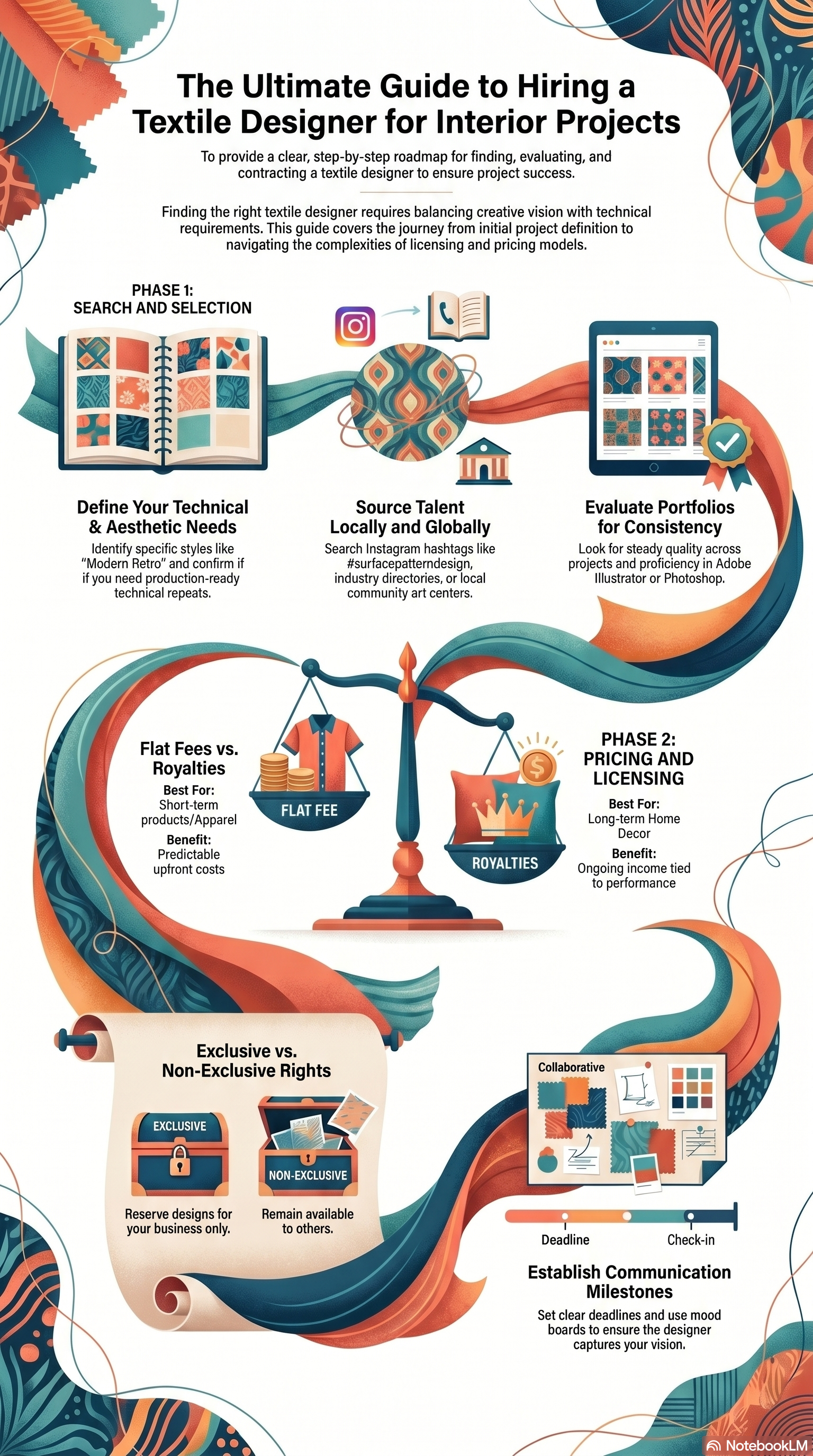
A practical, designer‑friendly guide to hiring a textile designer for interior projects—covering sourcing, portfolio evaluation, pricing models, and licensing essentials.